Tuesday, 9 May 2017

Friday, 28 April 2017
Monday, 24 April 2017
Representations in film
Most films represent certain social groups throughout. These representations can either be good such as the representation of black women in Spike Lee's 2015 film Chi-Raq or bad such as the representation of prisoners in Frank Darabont's 1994 film The Shawshank Redemption. Counter stereotypes are common in films like this, in The Shawshank Redemption, the protagonist (also a prisoner) is a good representation of a prisoner and a counter stereotype of what we think prisoners to be.
While it would be difficult for my film to represent any social groups because of the length of it and the fact that there is only two characters, it is important for me to keep in mind how representations work and how they give the audience an idea of what to expect from the social group in question.
While it would be difficult for my film to represent any social groups because of the length of it and the fact that there is only two characters, it is important for me to keep in mind how representations work and how they give the audience an idea of what to expect from the social group in question.
Risk assessment
Before I start filming my product, It is important to do a risk assessment to highlight any potential risks to my health. Below is a list of risks and how I will try to combat them.
- Rain damage - I will bring out umbrellas and a tarpaulin to protect expensive camera equipment from rain damage.
- Road awareness - I will make observations before crossing roads as some of the clips are on roads.
- Robbery - The camera equipment is expensive and therefore a target for thieves, to counter this I will carry a gun.. I joke, I will hide it when its not in use.
- Slipping up - If the ground is wet I could slip up and get injured. I will wear grippy shoes and be careful with my balance to counter this.
Saturday, 22 April 2017
Sound workshop (Tom Joyce)
In our media studies lesson on Tuesday the 14th of January, Tom Joyce gave a workshop on sound editing and capture. He emphasized the importance of sound in creating the right atmosphere for the accompanying picture. Having been through the same course as us a year prior, I took his advice on board. Below are the the tools required to record sound cheaply yet effectively.

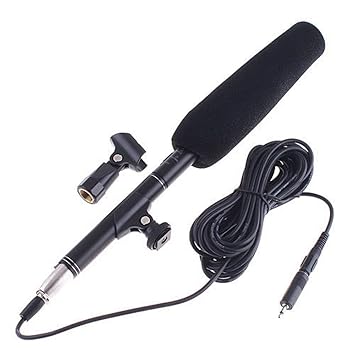
Left - Handheld digital recorder
Right - Long microphone
Tom explained that the easiest way to sync up audio to picture was the clap after 3 seconds and click both the record button on the camera and the microphone. This way, putting the audio and film together in the editing suite can be done with ease.
Tom also suggested adding in sound effects after the filming, this can be done using everyday items and a microphone and digital recorder. Below is a professional example of sound effects being created.
2. How does your media product represent certain social groups?
How does your media product represent certain social groups?
Wednesday, 19 April 2017
Codes and conventions of a short film
In order for me to make my film, it is important for me to fully understand what a short film consists of. As the length of the film is considerably less than a full length film, There are far fewer characters (usually around 2 or 3). This is because there is often not enough time for the introduction of more than a few characters with a background. A good short film will include an enigma for the audience to ponder over, this holds their attention until the enigma is solved. The length of the films are between 2 and 10 minutes and therefore require a far smaller budget than feature length films, short film directors and producers are also usually independent and lack the funding of large conglomerate production companies. The narrative of short films is often relatable, taking an everyday situation as a base. This is because it's not worth creating an expensive set and having a complex plot as the audience only have around 10 minutes to comprehend it all.
Monday, 27 March 2017
1. In what ways does your media product use, develop or challenge forms and conventions of real media products?
1. In what ways does your media product use, develop or challenge forms and conventions of real media products?
Tuesday, 28 February 2017
Lighting
Lighting can be the difference between a professional, interesting shot and a dull and rookie one. Different lighting can set specific moods, playing to the audiences sub conscious. For example, in a horror film, there is more likely to be a range of darker shades and low key lighting, in contrast a comedy is likely to use high key lighting with bright colours and a warm temperature. Below are a few examples of lighting techniques in film:
Bokeh - Blurring background light sources and focusing on a subject matter in the foreground.
Soft light - Soft pools of light on a part of an actors face.
Light tint - Different tints can be used over a light to give the scene a different look. Matrix uses a green tint in many shots to show futurism.
Contrast - The use of silhouetting and high contrast enhances the mood of a shot, making the actors either stand out or difficult to make out depending on what contrasts to what background.
Balancing colour temperatures - using lights of different colour in the same shot can reiterate the location, mood and atmosphere. This is put to best effect in Terminator 2 at the end scene in the steel mill. Orange and blue are used in the same shot to show molten metal and moonlight.
High key - Using brighter lighting so that the characters are easily visible, mostly used in comedies.
Low key - Using darker lighting and colours to set a mysterious and uncertain atmosphere in the shot. Mostly used in horror films.
Hot edges - This technique requires using a soft light on the front of the character (Fill light) and a stronger light on the rear (Backlight) to give the character a hot edge around their body.
Top lighting - When a light source from above shines down on the subject matter, illuminating it from above.
Monday, 27 February 2017
Our film Ideas and Synopsis
Our initial ideas for our opening sequence of a film are as follows:
A film following the life of Issei Sagawa. Issei was a Japanese man who in 1981, while studying in Paris, killed and cannibalised on a Dutch student named Renee Hartevelt.
In a 2011 Vice documentary, Sagawa claimed his desire for human flesh originated from seeing a males thigh while at school. He also confessed to bestiality with his dog while he was a child.
When he was 23, In Tokyo, Sagawa followed a German woman home with the intent to murder and eat her, however she awoke after a small bit of flesh was taken and called the police. Sagawa was areested for attempted rape, he did not confess to his true intentions.
When he was 28, he emigrated to France to study for a PhD in literature at Sorbonne. While in Paris he claimed "Almost every night I would bring a prostitute home and then try to shoot them, but for some reason my fingers froze up and I couldn't pull the trigger."
When Issei was 32, he invited a classmate to his apartment for dinner with the false intent of translating poetry for a school assignment. Issei had selected Renee for her health characteristics which he claimed he lacked, he said later said he wanted to absorb her energy through cannibalisation.
Issei shot Renee in the back of her head with a rifle, immediately afterwards he fainted. He later awoke and tried to cut into her flesh. He purchased a butchers knife to cut Renee up easily and stored body parts in his fridge for 2 days, occasionally eating various parts of her.
Issei then tried to dump the remaining body parts in a river in two suitcases. However he was caught in the act and arrested by French police.
Issei was jailed for a while in France but after being diagnosed with mental illness he was extradited to Japan where he lived out the rest of his life freely.
Of course the story is a bit more complicated that this and if I were making a full film I would explain it all in detail. However we are shooting only the opening to the film. In this short clip we have the task of identifying Issei, creating an enigma, creating tension and suspense and keeping the viewer interested and keen on watching the remainder of the film in theory.
Our early idea for the short clip is having Issei walking through a graveyard at night dressed in all black. We also want to depict Issei's first victim which he followed home and attempted to eat. A short chase scene and a final scene of Issei hiding in the woman's home should be included. To create suspense, the attempt on the woman's life should not be included in the opening as this will create tension and hold the viewers attention. We were also thinking of having a scene of Issei dumping two suitcases at the beginning to create an enigma, however this idea is dependant on how much time is left after the other scenes.
Rule Of Thirds
The rule of thirds is a well known compositional factor to consider when shooting film or photography. The concept is splitting the frame into 9 blocks by 4 lines as pictured below.
 Placing subject matters along the lines or on the intersections between the lines creates a visually aesthetic image. The image becomes more balanced and enables the viewer to connect with it more naturally. Studies have shown that people natural reaction when viewing an image is to look off centre, to the imaginary lines. Placing subject matters along the lines, or at the intersections, works with the viewers natural reaction, rather than against it. Below are a few of my own examples of rule of thirds. I have placed subject matters along the imaginary lines and intersections.


Thursday, 23 February 2017
Audience Feedback / Mid Project Review
As our film starts to take shape, it is important for us to obtain audience feedback. We did this by finding people similar to our Audience profile and showing them what footage we have so far and asking for their feedback. We asked for some things they liked as well as improvements they thought we should make. All feedback I am sharing is confidential.
Positives:
- The sound effects when the pigs are shown, this was said to create an enigma as well as dramatic effect. This scene caused our audience to cuss profanities in shock, this shows how powerful our film is in provoking a response.
- Leading lines were used to good effect, drawing the viewers eyes onto the focus of each shot.
- The high angle shots used create effect, making the female actress seem vulnerable, as if she's being watched.
Negatives:
- A lot of the feedback was in relation to our titles and lack of them. The effects in which the title come on screen also needs work.
- While we haven't completed our film, two of the audience commented on the camera sound being heard in the film. This reduces believability and needs taking out of our final piece.
- Because of the timing of our filming, many of the clips seem grainy and out of focus. This gives the film an unprofessional look. However the only solution to the problem is refilming what have done so far at a more suitable time of day when there is a lot more natural light.
- Our actors and their characters lack any introduction or shots establishing who they are/what they're like. To change this, shots and props will be used highlighting key areas of their personalities.
Friday, 17 February 2017
Opening Sequence Analysis (Narcos)
Mrs Elliott, our media studies tutor, has informed us that our main task will be to create the opening/title sequence of a feature length film. Although we haven't been given a criteria for this task yet, I think it would better my odds of creating a decent film if i researched into the topic. In this post I will analyse the opening sequence of Narcos as well as
Narcos is an American crime thriller based around the life of Pablo Escobar, The show aired first on August 28, 2015 as a Netflix exclusive. I have chosen to analyse the opening of this particular show as it has a lot in common with what i am trying to achieve with my own opening sequence. Narcos is based on real events, it is about crime and shows both sides of the story (from the protagonist's view as well as the antagonists). the difference between my envision and Narcos is that I am trying to create a horror/thriller film while Narcos is a crime/political television show.
In the opening credits of Narcos, a spanish song is played from around the same era as the show is set. the images on screen are all either photographs or 2 second long film clips. All the photographs and film is real footage from the time depicting mostly Pablo Escobar and cocaine. There are also photographs of women, DEA agents and money. All of these things make up the show so having them in the opening informs the audience of what they're about to watch. the opening of Narcos shows both sides of the story, both from the the american DEA agents as well as Escobar and his cocaine smuggling army. This is important as it's what I want to do with my opening scene.
In my opening scene, I want to incorporate real photographs of the time period it's set in. I want these photographs to link directly to the film. Because my opening is for a horror/thriller, I want to use disturbing images such as victims bodies and bloodstained crime scenes. This will hopefully set the tone for the rest of the film. I don't want to use music in my opening scene as i feel silence would create tension and dramatic affect.
Narcos is an American crime thriller based around the life of Pablo Escobar, The show aired first on August 28, 2015 as a Netflix exclusive. I have chosen to analyse the opening of this particular show as it has a lot in common with what i am trying to achieve with my own opening sequence. Narcos is based on real events, it is about crime and shows both sides of the story (from the protagonist's view as well as the antagonists). the difference between my envision and Narcos is that I am trying to create a horror/thriller film while Narcos is a crime/political television show.
In my opening scene, I want to incorporate real photographs of the time period it's set in. I want these photographs to link directly to the film. Because my opening is for a horror/thriller, I want to use disturbing images such as victims bodies and bloodstained crime scenes. This will hopefully set the tone for the rest of the film. I don't want to use music in my opening scene as i feel silence would create tension and dramatic affect.
The Power Of Sound
Sound in film sets the mood/atmosphere, creates realism and believability and also puts meaning behind footage in terms of dialogue. Sound is often taken for granted in film however without it, you would notice. Silent films were once popular, however they would struggle to keep up with today's films with sound.
sound can be edited to film or recorded alongside the film at the same time. It is now uncommon for sound to be recorded (besides dialogue) alongside the film. therefore, many websites have sprung up offering royalty free music and sound effects that are copyright free and therefore safe to edit into a film.
Sound will often change with genre, for example horror films will often hold back on sound to create tension before using loud and unpleasant sounds to incite a reaction from the audience. This is perhaps seen best in paranormal activity.
Rhythm is often used in films in music such as Jaws, but also in dialogue. This is best shown in 'any given Sunday' when Al Pacino's character gives a speech, pausing after every 3 words/sentence. this creates dramatic affect and makes the audience more inclined to listen to him.
Tuesday, 13 December 2016
Mise-en-scene
 Mise-en-scene refers to the arrangement of props, costume, lighting, actors and decoration in the scene. It derives from the french term meaning placement on stage and can refer to plays as well as film. In short, mise-en-scene is the way the frame is set up in terms of how items and lighting are arranged. Mise-en-scene can have dramatic effects on the genre, style and general looks of the scene.
In the image above, the mise en scene is all used to focus in on the female on the sofa. She is in the centre of the screen surrounded by people. The props are all golden covered and the lighting is high key which again signifies wealth.
In our film, there will be low key lighting to highlight the dark intentions of the protagonist. He will also be wearing a long black greatcoat as the color black denotes mystery and the possibility of evil. The majority of camera shots will only show parts or none of the protagonists face to portray mystery and to some extent, put across a level of suspense and an enigma as the audience will have to wonder who the man is.
Tuesday, 29 November 2016
Final Piece
Our final piece for as media this year is to do the following; The titles and opening of a new fiction film, to last a maximum of two minutes. This brief is small and open to interpretation. In a sense, our film opening could be anything as long as we include title scenes. In our opening scene i will try and use as much of my research as possible to achieve the best possible film, this includes match on action, shot reverse shot as well as the compositional techniques i have learned. It is also vitally important that I research opening scenes for other films and make notes on when the titles come up on screen as well as how the genre is portrayed. I'm thinking about making a horror/thriller film opening so my research will focus on this genre of film.
Friday, 25 November 2016
Simon Hall Visit

The link to Simon's twitter is as follows - https://twitter.com/SimonHallNews?lang=en
Friday, 11 November 2016
Camera Angles

Camera angles have a huge impact on a film's composition. Having a plethora of different camera angles in a film can make it far more interesting to the audience. When thinking of what camera angles are needed in a film, it's important to think of the three following factors; length of shot (time), Angle/framing and if there is movement in the frame. For example, the opening sequence of a film or scene may include an extreme long shot to set the scene, informing the audience of where the scene is taking place. On the other hand, if a character is exerting expressions an extreme close up may be used to show the audience the expressions in more clarity and detail. Below are a number of camera angles and a description with each of where the shot might be used and what for.
 |
| Extreme Close Up (ECU) Used to show emotion such as tension, elation or happiness facial expression gives the audience a clear picture of how the protagonist feels. |
 |
| Worms Eye A camera angle from the perspective of a worm on the floor. This angle gives the impression the focus of the shot is larger than in reality This can be used to portray a characters significance. |

 |
| Big close up (BCU) Used to show where character is looking/Thinking By showing facial expression and emotion. Some background can be seen which is used to show setting ect. |
 |
| Long Shot (LS) Long shots include the entire character or more than one. These shots allow the audience to see more than other shots, giving them a larger picture of the action. |
 |
| Birds Eye This angle is from the perspective of a bird, otherwise known as an aerial shot. This angle emphasizes a spectacle by giving the audience a clear view over the action. |
 |
| Close up (CU) This shot, and other variations of it are used to show emotion as well as a closer/clearer view of the drama unfolding. Close up's are often used for important characters as they can change the audiences opinion or trigger their emotions by allowing a closer view. |
 |
| Medium shot (MS) This shot is similar to close up shots however the torso and upper arms are visible. This allows the audience to see what the main protagonist is doing. This shot also allows the viewer to see any alteration to a characters body, e.g. cuts and bruises. |
It is important that I research these camera angles and shots as I will be using them in my preliminary and main task. I now understand the basis of which shot/angle to use and why, allowing me to create more professional films. Combining these camera angles and shots with my compositional research should provide me with aesthetic shots for my own film.
The Rule Of Thirds
The rule of thirds is a camera composition rule. It has been described as one of the most important rules of photography. It consists of diving the shot into nine parts by drawing two lines equidistant from each other horizontally and vertically. Points of interest should be focused on these lines to increase the visual aesthetics of the shot. For example, in a portrait, the focus should be off centre to cover one of the cross sectional lines. Below is several examples from my own source to demonstrate the rule.

As you can see from the picture (left) the lines provide a guide for the position of points of interest. Eye lines should be on these lines for example.
 Here are a few examples of the rule of thirds in action. As you can see, the main focal points of the photograph are along the lines. This makes the picture far more aesthetically pleasing to the viewer and keeps them interested in what is going on in said picture.
When filming my main or preliminary tasks, I will be keeping the rule of thirds in mind. A good film uses this compositional technique in almost all aesthetic shots. As you can see below in the film clip, the rule of thirds is used to make the shot more visually appealing to the viewer. Eyes of characters are often along the cross sectional lines of the rule of thirds. I will be using this technique in my own future films.
Subscribe to:
Posts (Atom)